
Climate AI · 2025
ROOTS
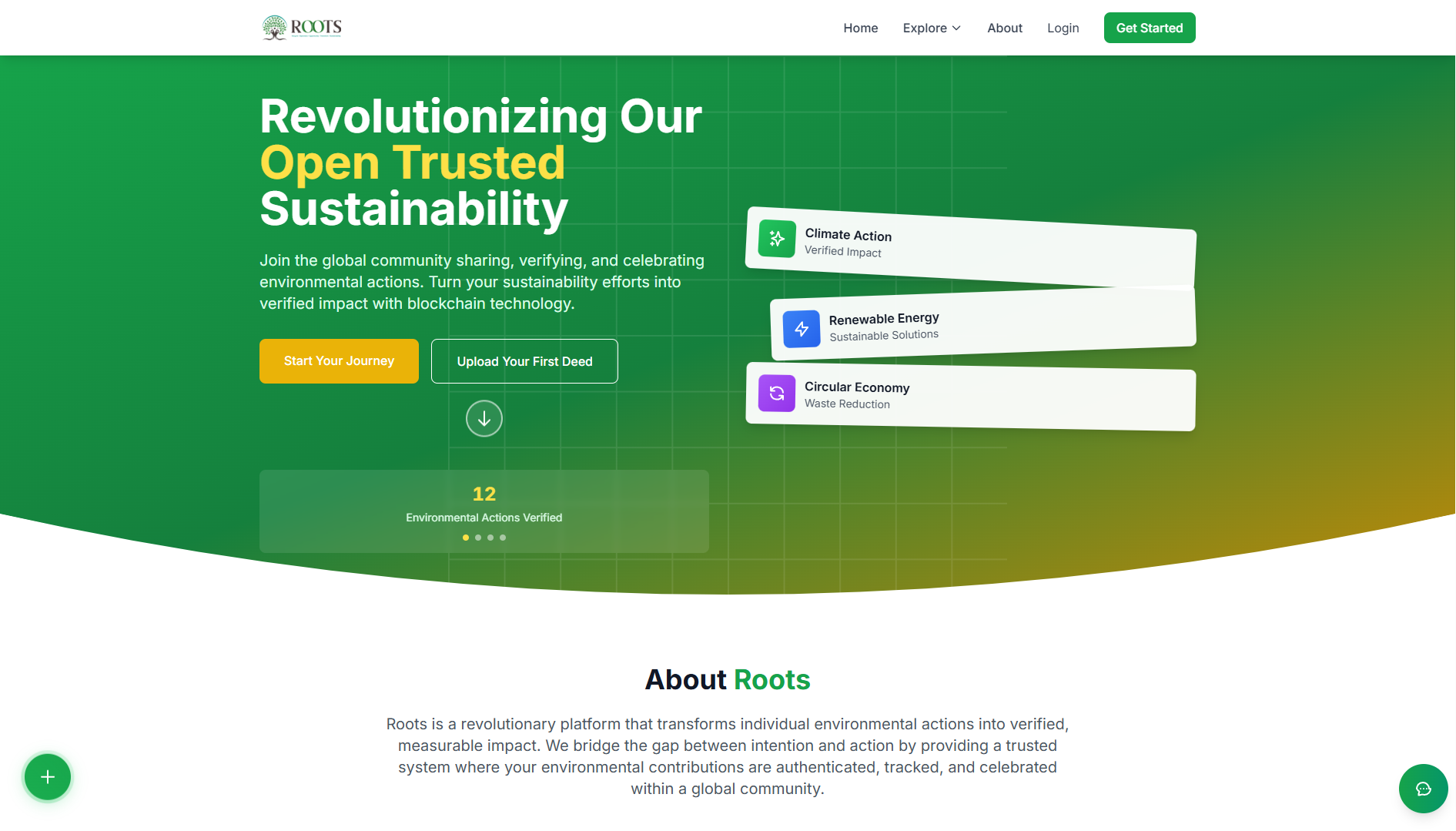
A computer-vision-verified sustainability platform that calculates real carbon saved. Represented India at the IEEE YESIST12 Grand Finale in Malaysia — Top 30 of 3,000+ teams globally.
What was broken before this existed.
Many sustainability platforms rely entirely on self-reported actions. Without evidence or consistent carbon calculations, impact claims are difficult to verify and users have little reason to trust the totals they see.
What I actually built.
As co-founder for ML and backend, I trained the YOLOv8 model on eco-action data, built the photo-verification pipeline, integrated Gemini for contextual cross-checking, and shipped the engine that converts verified actions into carbon-savings estimates.
How it works under the hood.
A user uploads a photo and description of an environmental action. YOLOv8 classifies the image, Gemini cross-references the visual result with the description, and the verified action is mapped to a carbon-coefficient table before the calculated savings appear on the dashboard.
The trade-offs that mattered.
- Use a task-specific vision model
YOLOv8 provided control over the eco-action classes and training data instead of making verification depend entirely on a generic hosted vision response.
- Cross-check ambiguous evidence
The image prediction is compared with the user's description through Gemini. This second signal reduces false confidence when a photo can reasonably represent more than one action.
- Keep carbon math inspectable
Verified actions map to a defined coefficient table, separating evidence verification from impact calculation and making estimates easier to review and refine.
The hard numbers.
ROOTS represented India at the IEEE YESIST12 Grand Finale in Malaysia, finishing among the top 30 of more than 3,000 teams worldwide. The platform went on to serve 100+ active users.
One honest takeaway.
“Impact numbers are only persuasive when the evidence and calculation behind them are understandable, not merely impressive.”